Taiwan's Enduring Contributions to the PIF and its Precarious Future
For decades, Taiwan has been an active and valued partner in the Pacific Islands Forum (PIF), the premier political and economic policy organization in the Pacific region. Its engagement, solidified as a dialogue partner since 1993 following an agreement by PIF leaders in 1992, has seen significant contributions to regional development, climate resilience, and governance. However, recent developments, particularly signals from the Solomon Islands regarding the 2025 PIF Leaders Meeting, cast a long shadow of uncertainty over Taiwan's continued
pif taiwan membership status, challenging regional unity and highlighting the growing geopolitical competition in the Blue Pacific.
A Legacy of Engagement: Taiwan's Vital Role in Pacific Development
Taiwan’s commitment to the Pacific Islands Forum goes far beyond mere attendance; it is rooted in tangible development cooperation and substantial financial aid. As a founding PIF Dialogue Partner, Taiwan has consistently supported the bloc's initiatives, demonstrating an unwavering dedication to the progress and resilience of Pacific Island nations.
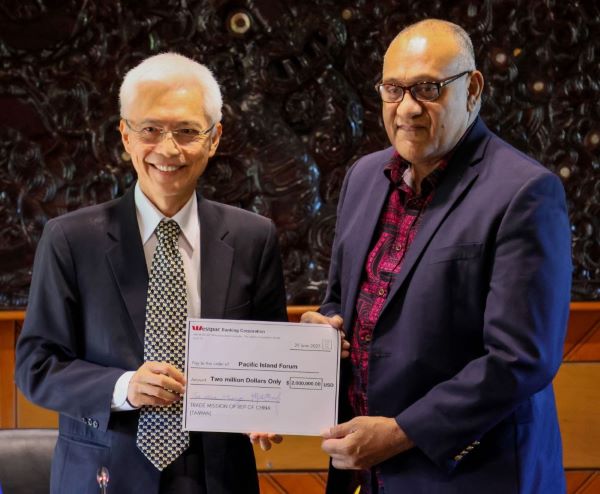
A clear example of this dedication came in June 2023, when Taiwan provided a significant US$2 million boost to the PIF. These funds were specifically earmarked for crucial areas, including forum coordination, management of cooperation activities, regional governance, and vital training programs. Critically, a substantial portion of this contribution was directed towards supporting the ambitious "2050 Strategy for a Blue Pacific Continent." This strategy represents the collective vision of Pacific leaders for a secure, prosperous, and resilient future for the region, and Taiwan's financial support underscores its alignment with these shared objectives. Joseph Chow, Taiwan's Representative to Fiji, reiterated at the handover ceremony Taiwan's "unwavering dedication" and "longstanding support for regional development," affirming the pivotal role of
pif taiwan membership in advancing the region's priorities. Deputy Secretary General of the PIF, Dr. Filimon Manoni, publicly acknowledged Taiwan's generosity, emphasizing how this development cooperation ensures continued support for the Pacific's response to its articulated development priorities.
These contributions are particularly vital given the unique vulnerabilities faced by Pacific Island Countries, from the existential threat of climate change to challenges in sustainable resource management and good governance. Taiwan’s assistance has provided critical resources, helping to build capacity, implement climate adaptation measures, and strengthen regional coordination – all essential elements for achieving the goals of the 2050 Strategy.
The Shifting Sands of Geopolitics: Challenges to PIF Taiwan Membership
Despite its long history of contributions and partnership, Taiwan's continued presence at the PIF is increasingly under threat due to shifting diplomatic landscapes and intensified geopolitical maneuvering. Of the 18 PIF member states, only three—the Marshall Islands, Palau, and Tuvalu—currently maintain formal diplomatic ties with Taiwan. This represents a significant decline, largely influenced by Beijing's "One China" policy and its growing economic and diplomatic overtures in the region.
The Solomon Islands, which severed its diplomatic relationship with Taiwan in favor of China in 2019, has emerged as a key player in the recent push for Taiwan's exclusion. Reports suggest that Beijing has exerted pressure on Honiara to limit Taiwan’s engagement with the PIF. This became evident with Solomon Islands Prime Minister Jeremiah Manele’s announcement that the upcoming 54th Leaders Meeting, scheduled for September 25 in Honiara, would strictly invite only the 18 full PIF members. Donor countries and "dialogue and development partners" such as Taiwan, the U.S., and even China itself, would reportedly not be invited. This move directly contradicts the established precedent of allowing dialogue partners to attend, a practice affirmed by PIF leaders as far back as 1992.
The Solomon Islands' decision introduces a significant challenge to the long-standing framework of
pif taiwan membership and regional engagement. While a host nation typically has some discretion, a departure from established protocol, especially one seen to be influenced by external powers, raises concerns about the Forum's autonomy and its ability to make collective decisions free from undue influence. For a deeper dive into the geopolitical implications of these shifts, consider reading
Taiwan's PIF Exclusion: Geopolitics and Pacific Regional Unity.
International Reactions and the Future of PIF Cohesion
The proposed exclusion of Taiwan has not gone unnoticed by the international community, sparking expressions of disappointment and concern from key global partners. The United States, a founding PIF Dialogue Partner itself, swiftly voiced its dismay over the Solomon Islands’ decision. A State Department spokesperson emphasized the U.S.'s support for "the continued attendance of all PIF partners, including Taiwan, at the annual PIF Leaders Meeting, as previously agreed by PIF leaders in 1992." The U.S. reiterated its commitment to engagement with the Pacific Islands and to deepening partnerships with the PIF, aiming to support a free and open Indo-Pacific region.
Similarly, New Zealand, a prominent PIF member, articulated its support for maintaining the existing arrangements. A spokesperson for New Zealand’s Ministry of Foreign Affairs and Trade stated that Wellington backs "a continuation of the long-standing approach" of allowing global partners to attend the PIF and engage in discussions on regional priorities. This consistent stance from established democratic partners highlights the importance of inclusivity and adherence to established protocols within regional bodies.
In Taipei, Taiwan's Ministry of Foreign Affairs (MOFA) appealed directly to the PIF to "maintain its existing arrangements" and ensure Taiwan’s participation as a "development partner." This plea underscores Taiwan's desire to continue its productive engagement and uphold the spirit of collaboration that has characterized its
pif taiwan membership for decades. The unfolding situation presents a critical test for the PIF's cohesion and its ability to navigate complex geopolitical currents while upholding its core principles of regional unity and shared decision-making. The U.S. stance on this issue is further explored in
US Decries Taiwan's PIF Ouster Amid Solomon Islands' China Shift.
Implications for the Blue Pacific: Why Inclusivity Matters
The potential exclusion of Taiwan from PIF Leaders Meetings carries significant implications for the Pacific Islands region, particularly concerning its collective vision articulated in the 2050 Strategy for a Blue Pacific Continent. This ambitious strategy aims to secure the region's future through enhanced regional cooperation on issues ranging from climate change and maritime security to economic development and resource management. Taiwan’s consistent financial and technical contributions have been instrumental in supporting these efforts.
**Practical Takeaways:**
* **Consistency is Key:** The PIF, as the region's leading voice, benefits from consistent engagement policies for all its partners, especially those with long histories of contribution. Diverting from established agreements (like the 1992 understanding) can undermine trust and predictability.
* **Value of Development Partners:** Dialogue and development partners, including Taiwan, bring crucial resources, expertise, and alternative perspectives that enrich regional discussions and bolster development outcomes. Limiting their participation risks reducing the pool of support available for critical regional priorities.
* **Regional Autonomy vs. External Influence:** The Solomon Islands' decision, perceived by many as influenced by China, raises questions about the PIF's ability to maintain its autonomy in decision-making. For the "Blue Pacific Continent" to truly flourish, its leaders must prioritize regional interests above external pressures.
* **Fact:** The 2050 Strategy highlights critical areas where Taiwan's aid (e.g., climate resilience, governance training) directly contributes to regional goals.
Excluding a committed development partner like Taiwan could lead to a deficit in resources and expertise, potentially slowing progress on vital initiatives. Moreover, it could set a precedent where political expediency or external pressures overshadow the long-term benefits of inclusive regional cooperation. The PIF's strength lies in its ability to foster dialogue and address challenges collectively, drawing on the support of all partners who share its vision for a prosperous and resilient Pacific.
Conclusion
Taiwan’s long-standing and substantial contributions to the Pacific Islands Forum underscore its pivotal role as a development partner committed to the region's progress. From significant financial aid supporting the ambitious 2050 Strategy for a Blue Pacific Continent to decades of technical assistance, Taiwan's
pif taiwan membership has been mutually beneficial. However, the recent decision by the Solomon Islands, influenced by shifting diplomatic tides and geopolitical competition, threatens to undermine this valuable partnership and challenge the very principles of inclusivity and established agreements within the PIF. The strong reactions from the United States and New Zealand highlight the broader international concern for regional stability and the importance of maintaining consistent engagement. As the PIF navigates these complex waters, the future of Taiwan’s participation remains uncertain, posing a critical test for the forum’s cohesion, autonomy, and its collective vision for a resilient and prosperous Pacific.